거대한 로마 황제가 왜 아드리아 해변 촌구석 항구마을에?
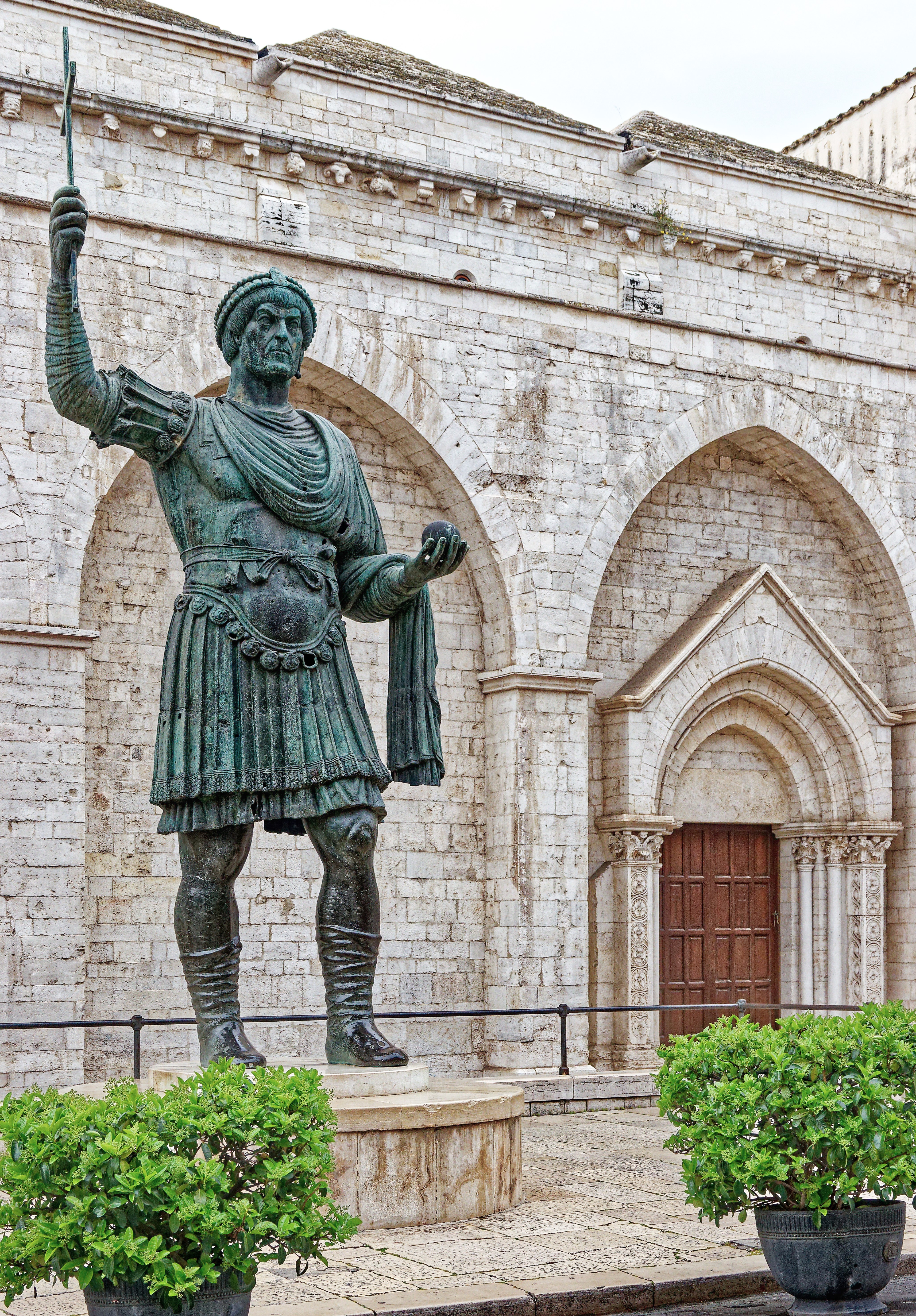
로마 황제를 묘사한 조각상 중 하나다.
흥미로운 이야기가 얽혀 있는 이 거대 조각상은 1204년 콘스탄티노플 약탈 당시 함께 약탈당했다.
베네치아로 향하던 중 배가 폭풍을 만나 조각상이 바다에 빠졌다.
그리고 몇 달 또는 몇 년 후, 바를레타라Barletta는 마을 해안으로 떠밀려와 오늘날까지 그곳에 서 있다.
이 조각상은 발렌티니아누스Valentinian 1세 또는 2세, 테오도시우스Theodosius 2세, 또는 마르키아누스Marcian 황제를 묘사한 것으로 추정한다.
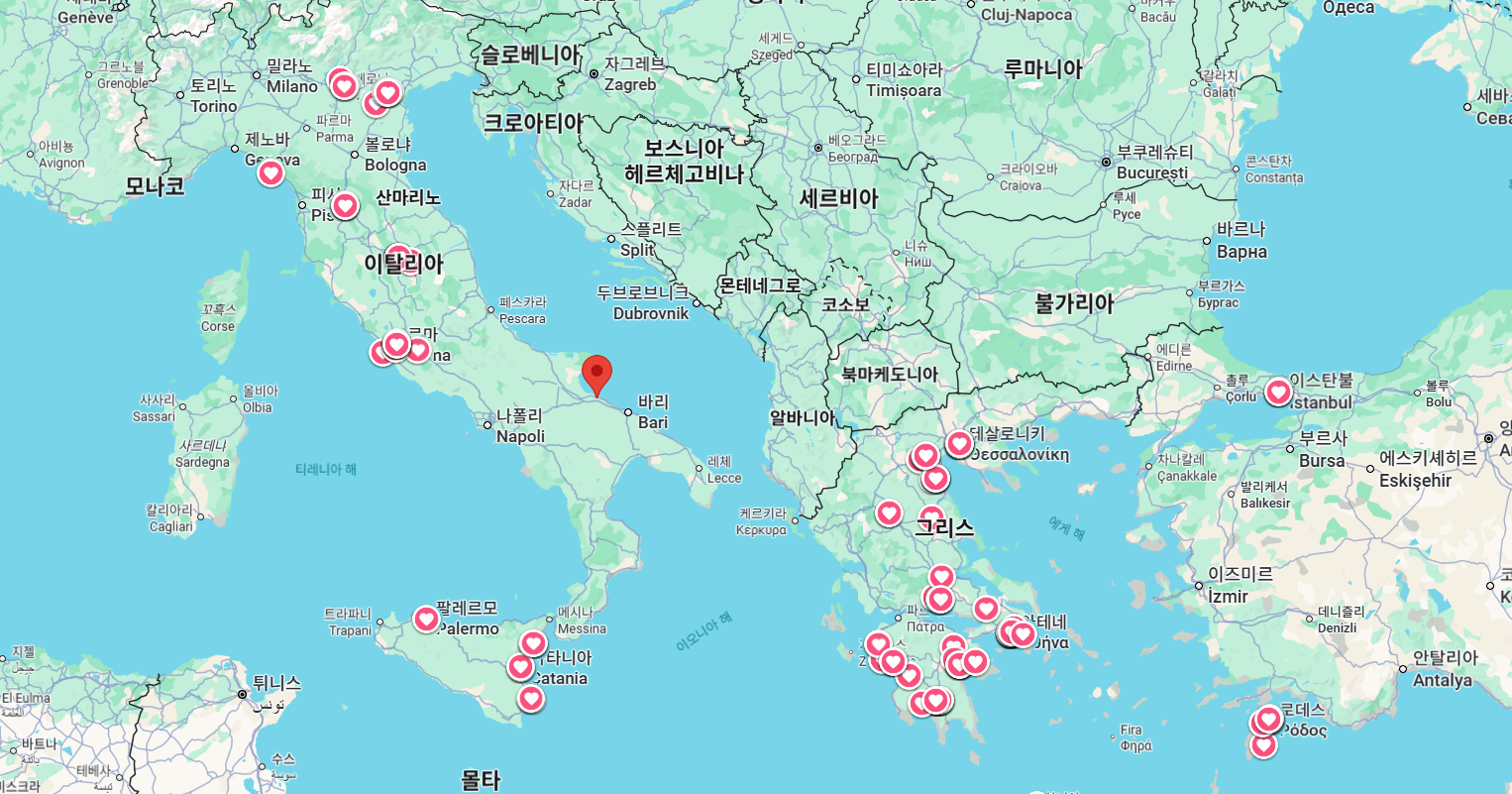
저 조각을 바를레타의 거상巨像Colossus of Barletta이라 일컫는데, 관련 설명을 위키피디아 영문 항목에서 빌려온다.
The Colossus of Barletta is a large bronze statue of a Roman emperor, nearly three times life size (5.11 meters, or about 16 feet 7 inches), in the historic center of Barletta, Italy. It is a Late Antique statue, but the date, identity of the emperor, and the original location of the statue remain uncertain. Most datings are to the 5th or early 6th centuries, and many think it was made in Constantinople, and perhaps originally placed there. It is the largest Roman or Byzantine bronze statue to have survived essentially intact.
바를레타의 거상은 이탈리아 바를레타 역사 지구 중심부에 있는 로마 황제의 대형 청동상으로, 실물 크기의 거의 세 배에 달하는 5.11미터(약 16피트 7인치) 크기다. 이 조각상은 후기 고대 시대 것으로 추정되지만 제작 연대, 황제의 신원, 그리고 원래 위치는 여전히 불확실하다. 그런 가운데 5세기 또는 6세기 초 제작으로 보며, 콘스탄티노플에서 제작되어 원래 그곳에 세워졌을 것이라고 추측하는 사람도 많다. 이 거상은 거의 온전한 상태로 남아 있는 가장 큰 로마 또는 비잔틴 시대 청동상이다.
History
The original location of the statue is unclear, but it was probably somewhere more important than Barletta, a small port on the Adriatic Sea. According to local legend, the statue supposedly washed up on the shore, after a Venetian ship sank returning from the Sack of Constantinople in the Fourth Crusade in 1204, but it is not impossible that the statue was sent to the West much earlier. The identity of the emperor is uncertain.
It is known that a colossal statue was discovered in 1231 during excavations commissioned by emperor Frederick II in Ravenna and it is possible that he had it transported to his southern Italian lands. Regardless, the first certain historical reference to the statue dates from 1309, when parts of its legs and arms were used by local Dominicans to cast bells. The artist Fabio Alfano did a partial restoration of the statue in 1431.[1] The restored colossus was re-erected on 14 May 1491 in front of Church of the Holy Sepulchre (Barletta).[2]
역사
조각상 원래 위치는 불분명하지만, 아드리아해 작은 항구 도시인 바를레타보다 더 중요한 곳이었을 가능성이 높다. 지역 전설에 따르면, 이 조각상은 1204년 제4차 십자군 전쟁 당시 콘스탄티노플을 약탈하고 돌아오던 베네치아 배가 침몰한 후 해안으로 밀려왔다고 한다. 하지만 이 조각상이 훨씬 이전에 서방으로 옮겨졌을 가능성도 배제할 수 없다. 조각상 주인공이 황제였는지도 확실하지 않다.
1231년 신성 로마 제국 황제 프리드리히 2세가 라벤나에서 의뢰한 발굴 작업 중 거대한 조각상이 발견되었으며, 그가 이 조각상을 남부 이탈리아 영토로 옮겼을 가능성도 있다. 어쨌든, 이 조각상에 대한 최초의 확실한 역사적 기록은 1309년으로 거슬러 올라가는데, 당시 지역 도미니크회 수도사들이 조각상 다리와 팔 일부를 사용해 종을 주조했다는 내용이다. 예술가 파비오 알파노는 1431년에 이 조각상을 부분적으로 복원했다.[1] 복원된 거대 조각상은 1491년 5월 14일 성묘 교회(바를레타) 앞에 다시 세워졌다.[2]
Description
The figure evidently depicts an emperor due to his imperial diadem, beneath which the hair falls in rolls.[3] He has a commanding gesture that invokes the act of delivering a speech, with his right arm raised. In his right hand, which originally held a spear or a labarum, later restorers inserted a cross. Over two tunics the emperor wears a cuirass, with pteruges, protective strips of cloth or leather, covering his shoulders and upper legs. His cloak is draped over his left arm in a portrait convention that goes back to Augustus. In his outstretched left hand he holds a small orb, another later addition to replace a larger original orb.
설명
이 인물은 황제의 왕관과 그 아래로 흘러내리는 머리카락으로 보아 황제를 묘사한 것이 분명하다.[3] 오른팔을 들어 올린 위엄 있는 자세는 마치 연설하는 듯한 모습을 연상케 한다. 원래 창이나 라바룸을 들었을 오른손에는 후대에 십자가가 추가되었다. 황제는 두 겹 튜닉 위에 갑옷을 입었으며, 어깨와 허벅지를 덮는 천이나 가죽으로 된 보호 띠인 프테루게스를 착용했다. 망토는 아우구스투스 시대부터 이어진 초상화 양식에 따라 왼팔에 걸쳤다. 뻗은 왼손에는 작은 구슬을 들었는데, 이 역시 원래의 더 큰 구슬을 대체하기 위해 후대에 추가된 것이다.
Identity of the emperor
According to tradition, the statue depicts Heraclius (r. 610–641), though this is most unlikely on historical and art-historical grounds. Several alternative candidates have been proposed, ranging from Valentinian I (r. 364–375) to Justinian I (r. 527–565).[2][4] Most modern scholars identify the emperor as either Marcian (r. 450–457), in which case it probably topped the Column of Marcian, or Leo I (r. 457–474), meaning it topped the Column of Leo,[5] both columns in Constantinople. However, Marcian's column has been noted as being too small for the scale of the statue.[6] The fact that the emperor is shown bearded has also been used to link it to Leo, although this identification is not always accepted.[4]
황제의 정체
전통에 따르면 이 조각상은 헤라클리우스(재위 610~641)를 묘사한 것이라 하지만, 역사적, 미술사적 관점에서 이는 가능성이 매우 낮다. 발렌티니아누스 1세(재위 364~375)부터 유스티니아누스 1세(재위 527~565)에 이르기까지 여러 대안이 제시되었다.[2][4] 대부분의 현대 학자는 이 조각상을 마르키아누스(재위 450~457) 또는 레오 1세(재위 457~474)로 보는데, 마르키아누스 1세일 경우 이 조각상은 콘스탄티노플에 있는 마르키아누스 기둥 꼭대기에 있었을 가능성이 높고, 레오 1세일 경우 이 조각상은 레오 기둥 꼭대기에 있었을 가능성이 높다.[5] 그러나 마르키아누스 기둥은 조각상 크기에 비해 너무 작다는 지적이 있다.[6] 황제가 수염을 기른 모습으로 묘사된 점 또한 레오 1세와 연관 짓는 근거로 사용되지만, 이러한 견해가 항상 받아들여지는 것은 아니다.[4]