가브리니스 거석기념물Cairn de Gavrinis, 브리타뉴 신석기 거석기념물의 거장
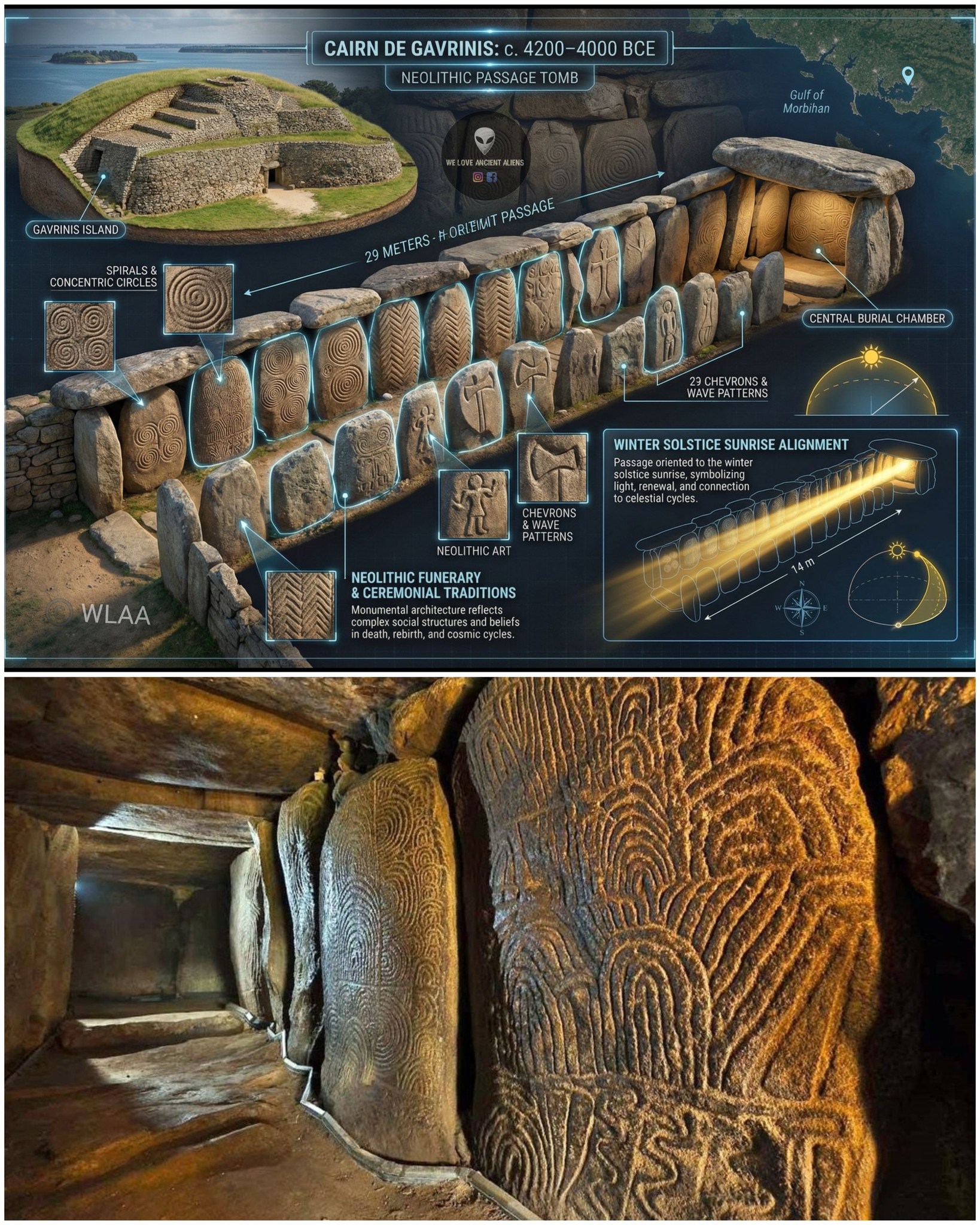
프랑스 브르타뉴Brittany 지방 모르비앙 만Gulf of Morbihan 작은 섬에 위치한 가브리니스 거석기념물Cairn de Gavrinis은 놀라운 신석기 시대 통로형 무덤passage tomb으로, 세계에서 가장 오래된 현존하는 기념비적 석조 구조물 중 하나로 간주된다.
기원전 4200년에서 4000년경에 건설된 이 기념물은 29개 거대한 입석upright stones으로 둘러싸인 중앙 매장실central burial chamber로 이어지는 14미터 길이 통로passage를 특징으로 한다.
이 입석 중 23개에는 나선형spirals, 갈매기형chevrons, 파도 무늬wave patterns, 동심원concentric circles과 같은 정교한 조각이 풍부하게 새겨져 유럽에서 가장 광범위한 거석 예술 컬렉션 중 하나를 형성한다.
이 무덤은 일반적으로 장례 및 의례용 기념물로 보며, 통로가 동지 때 떠오르는 태양을 향하도록 정렬되었다는 점은 신석기 시대 신앙 체계에서 죽음, 재생, 그리고 우주 순환 사이의 깊은 연관성을 시사한다.
The Cairn de Gavrinis is a remarkable Neolithic passage tomb set on a small island in the Gulf of Morbihan in Brittany, France, and is regarded as one of the oldest surviving monumental stone structures in the world.
Built around 4200–4000 BCE, the monument features a 14-metre-long passage leading to a central burial chamber, lined with 29 massive upright stones.
Twenty-three of these orthostats are richly carved with intricate engravings such as spirals, chevrons, wave patterns, and concentric circles, forming one of the most extensive collections of megalithic art in Europe.
The cairn is generally interpreted as a funerary and ceremonial monument, with its passage aligned to catch the rising sun at the winter solstice, suggesting a deep connection between death, rebirth, and cosmic cycles in Neolithic belief systems...