세공 기술 최고로 구현한 다키아 다이어뎀
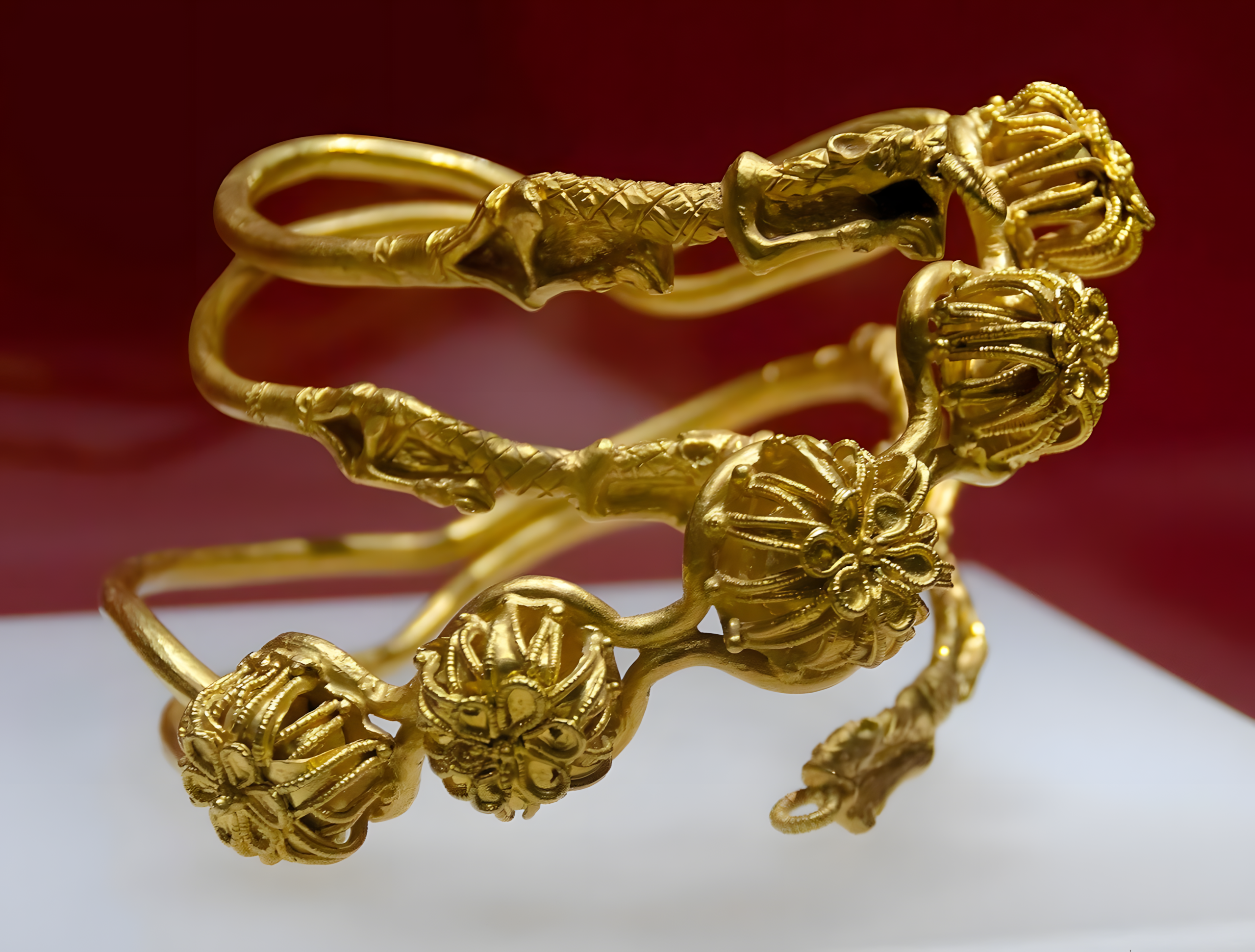
이 부네슈티-아베레슈티 왕관Diadem of Buneşti-Avereşti (기원전 4세기 말~3세기 초)은 로마 정복 이전 시대 다키아Dacia 엘리트 금세공 기술의 뛰어난 예시다.
순도가 높은 금으로 제작된 이 왕관은 속이 빈 관 모양 띠와 정교한 꽃무늬 장식으로 이루어지며, 과립granulation 세공filigree과 같은 고도의 기법을 사용하여 만들었다.
이러한 기법은 동시대 헬레니즘 시대 공방과 비견될 만한 수준의 기술력을 보여준다.
이 왕관은 단순한 장식품을 넘어 권위와 의례적 권력의 상징이었으며, 다키아 엘리트 계층 구성원이 의식이나 종교 행사에서 착용했을 것으로 추정힌다.
왕관에 새긴 꽃무늬는 풍요, 재생, 우주 질서와 같은 상징적 의미를 담았으며, 이는 트라키아-다키아Thraco-Dacia 신앙 체계에서 흔히 나타나는 주제다.
이 왕관은 로마 정복 이전 다키아 사회의 세련됨을 보여주며, 다키아인을 문화적으로 미개하다고 보는 낡은 관점에 도전한다.
The Diadem of Buneşti-Avereşti (late 4th–early 3rd century BC) is a striking example of elite Dacian goldwork from the pre-Roman period.
Crafted from high-purity gold, the diadem features hollow tubular bands and ornate floral terminals made using advanced techniques such as granulation and filigree-like decoration. These methods reflect a level of technical skill comparable to that of contemporary Hellenistic workshops.
More than an ornamental object, the diadem was a symbol of authority and ritual power, likely worn by a member of the Dacian elite during ceremonial or religious events. Its floral motifs carry symbolic associations with fertility, regeneration, and cosmic order, common themes in Thraco-Dacian belief systems.
The diadem highlights the sophistication of Dacian society before Roman conquest and challenges outdated views of the Dacians as culturally primitive.